
Fence Contractor in Orange County
Coming in 2027
Fence and gate building is coming to OC Renovation Group in 2027. We’re taking the time to put the right systems and planning in place first.
Planning a fence for 2027? Let’s start the conversation.
Fence installation in Orange County. Wood, vinyl, metal & composite fencing. Privacy, security & custom designs. Get your free consultation by a licensed contractor.


Strong, Stylish Fencing Solutions for Every Property
We’ll design and install fences that offer privacy, security, and style, with the craftsmanship Orange County homeowners already trust us for.
Fences we’ll build
Submit below for a no-pressure, no-obligation quote.No-pressure, no-obligation quote.
Show Estimate Form →Hide Form ↑

Orange County Fencing Contractor
Looking for expert fence services in Orange County? Whether you need a new fence, a gate, or a custom design, big or small, we’ll have you covered. Our skilled team will handle every project with precision and care to ensure safety, durability, and style.

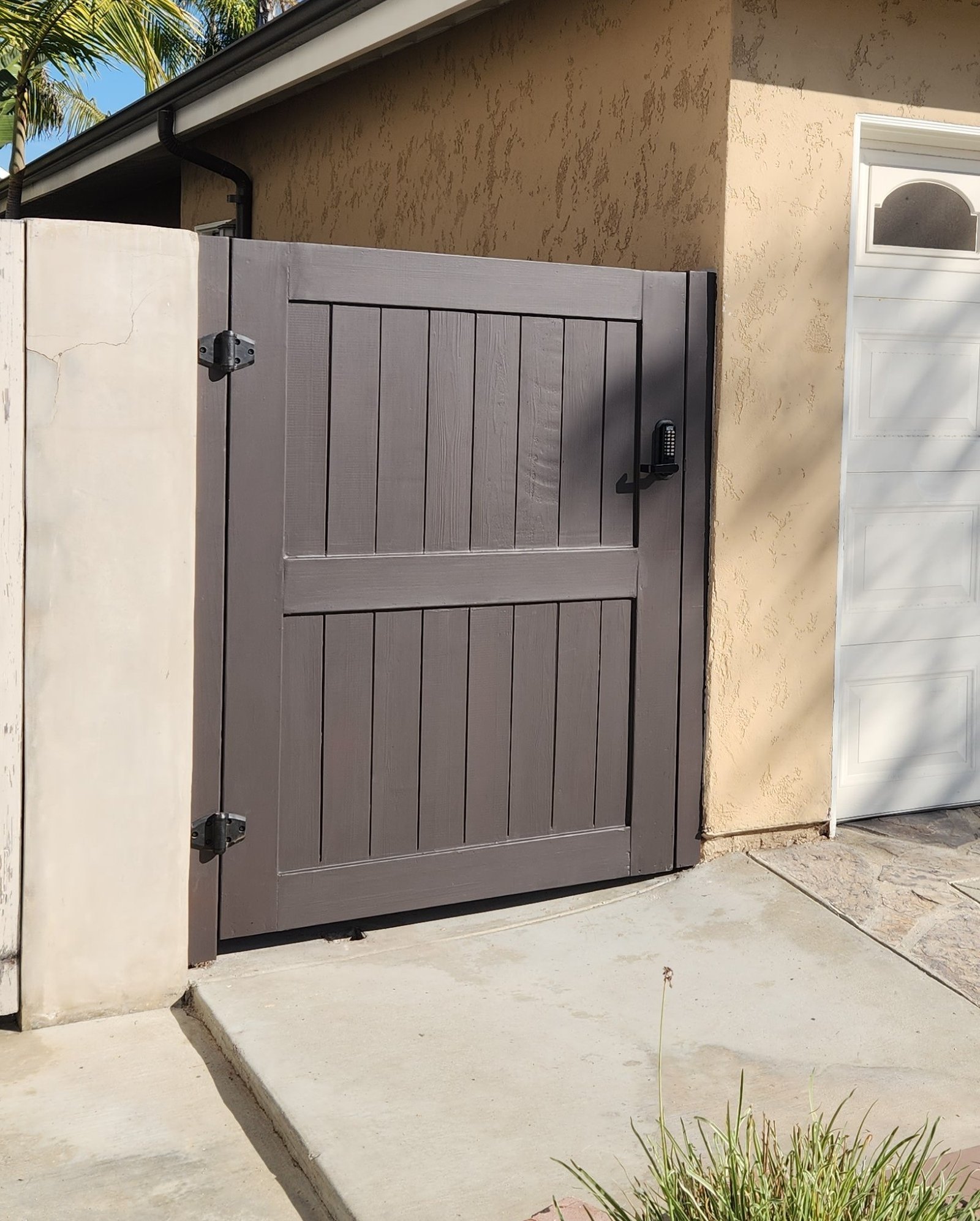
Common fence problems we’ll prevent
Most fence problems start the day the fence is built: shallow posts, the wrong lumber, nails instead of bolts. Here’s how we’ll build every fence to prevent them:
Leaning or sagging sections
Posts set deep, plumb and braced.
We’ll set 4×4 treated posts 32 to 36 inches deep in fresh concrete, plumb each one with a post level, and brace it with temporary 2×4 supports until the concrete cures for 48 hours.
Posts rotting at the ground
Ground-contact posts that shed water.
Pressure-treated posts rated for ground contact (.60 retention minimum), set in concrete with the top sloped away from the post so water can’t pool. A 2×4 rot board keeps the panels 2 to 3 inches off the soil.
Warped, broken or gapped boards
Kiln-dried boards, spaced and screwed.
Kiln-dried lumber with 1/8-inch gaps to allow for expansion, fastened with exterior-grade screws or ring-shank nails, never staples. On privacy fences, board-on-board overlap keeps coverage even with no sight gaps.
Sagging or dragging gates
Braced gates on deep posts.
A diagonal brace from the top hinge corner to the bottom latch corner, heavy-duty strap hinges or T-hinges rated for the gate’s size and weight, and gate posts set in extra-deep footings (36 to 42 inches).
Sections pulling away from posts
Bracketed and bolted, never nailed.
2×4 rails top, middle and bottom, fastened to the posts with galvanized fence brackets and 3-inch exterior-grade lag screws or through-bolts with fender washers. Nails pull out over time, so we won’t use them here.
Wobbly sections in Santa Ana winds
Braced corners and blocking.
Metal knee braces at corner and end posts, extra blocking between posts every 4 to 6 feet, and semi-privacy spacing in high-wind areas so the wind can pass through instead of pushing the fence over.
Termite and insect damage
Resistant wood, checked before it goes in.
Naturally resistant species like cedar and redwood, or composite that insects won’t touch, and every replacement board inspected for existing damage before installation.
Rust near the coast
Stainless or triple-coated hardware.
Stainless steel (304/316 grade) or triple-coated galvanized hardware that resists salt air. Standard zinc-plated fasteners rust within 2 to 3 years near the coast.
Planning a fence in Orange County for 2027? OC Renovation Group brings 20+ years of expertise to deliver lasting, code-compliant fences backed by professional-grade materials and hardware.
Fence Styles & Materials
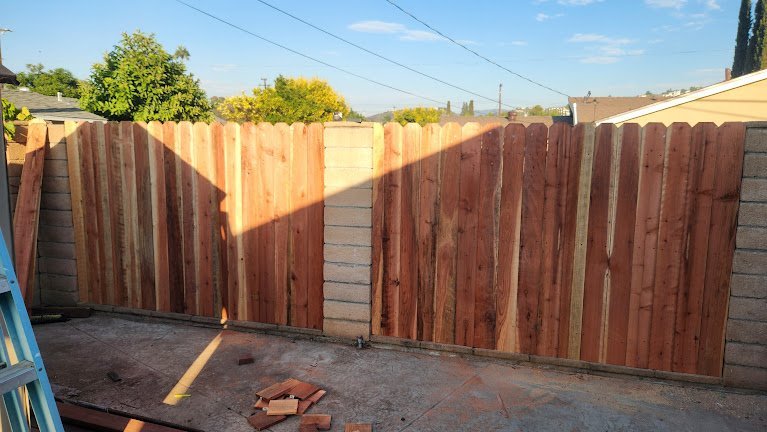
Wood Fencing
Wood fencing offers natural beauty and design versatility for any property style. We’ll work with premium cedar, redwood, and pressure-treated southern yellow pine, each offering distinct advantages for different applications.
Technical advantages
- Cedar contains natural oils (thujaplicin) that resist rot and insects
- We’ll set 4×4 posts 32 to 36 inches deep in concrete for structural integrity
- Proper board spacing (1/8″ gaps) allows for wood expansion/contraction
- Can be installed horizontally or vertically with hidden fasteners
With proper sealing every 2-3 years, expect 15-20+ year lifespan. Best for homeowners wanting authentic wood grain and complete design customization.
Privacy Fences
Privacy fences provide 100% sight-line blockage with board-on-board or solid panel construction, typically 6-8 feet tall. We’ll space posts every 6-8 feet maximum and use 2×6 or 2×8 horizontal rails for maximum panel support.
Construction details
- Board-on-board design (overlapping boards) prevents shrinkage gaps
- Rot boards (2×4 base trim) elevate fence panels 2-3″ above ground
- We’ll follow setback requirements (typically 3-6″ from property line)
Available in wood, vinyl, or composite materials. Best for pool areas, outdoor living spaces, and complete backyard seclusion with noise reduction benefits.
Vinyl Fencing
Vinyl (PVC) fencing eliminates wood maintenance while providing decades of durability. Quality vinyl contains titanium dioxide for UV protection and impact modifiers to prevent brittleness in temperature extremes.
Material specifications
- Virgin vinyl (not recycled) resists yellowing and chalking
- 5-6″ routed posts with aluminum reinforcement inserts
- Interlocking tongue-and-groove pickets prevent separation
Unlike painted wood, color is throughout the material, so scratches don’t show white underneath. Withstands salt air, moisture, and termites with zero maintenance beyond occasional washing. 25-30 year lifespan. Best for coastal properties and maintenance-free curb appeal.
Pool Fences & Safety Compliance
California law requires pool barriers minimum 5 feet tall with self-closing, self-latching gates (AB 1020). We’ll engineer code-compliant installations that pass building department inspections the first time.
Critical code requirements
- Maximum 4″ gap between vertical pickets (prevents child passage)
- Gates must swing outward from pool with self-latching hardware 54″ high
- No horizontal rails on pool side (prevents climbing)
- Fence must be 20 feet from pool or directly at property line
We’ll install aluminum, vinyl, composite, or glass panel systems with corrosion-resistant hardware rated for pool chemical exposure. Includes permit coordination and final inspection scheduling. Best for any swimming pool, spa, or water feature requiring safety barriers.
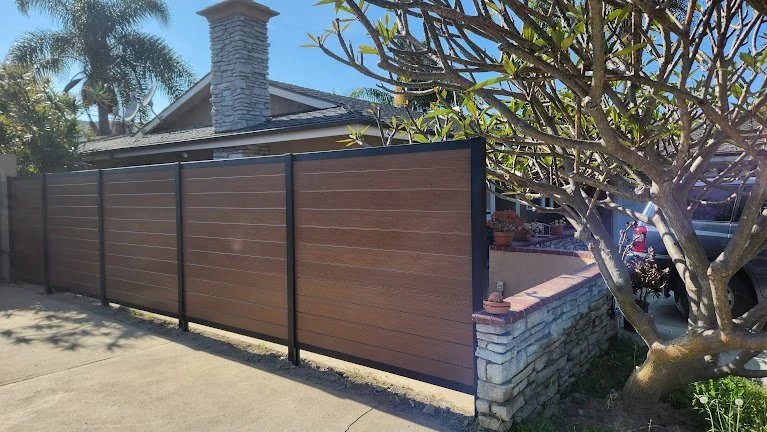
Composite Fencing
Composite fencing combines 50-60% recycled wood fiber with high-density polyethylene (HDPE) plastic, creating a material that mimics wood without deterioration. Unlike hollow vinyl, composite is solid-core for superior strength and sound dampening.
Technical advantages
- UV inhibitors throughout material (not just surface coating) prevent fading
- Won’t rot, splinter, or attract insects, ideal for coastal salt air exposure
- Thermal expansion rate similar to wood (minimal movement)
- Available with capped polymer shell for enhanced moisture resistance
Composite requires aluminum or steel-reinforced posts due to material weight. Zero maintenance beyond occasional rinsing. 25+ year lifespan. Premium pricing offset by eliminated maintenance costs. Best for eco-conscious homeowners and coastal properties demanding maximum durability.
Horizontal/Modern Fences
Horizontal fencing features boards installed parallel to the ground, creating clean contemporary lines popular in modern architecture. This orientation requires precision installation: boards must be perfectly level or visual errors become obvious.
Installation expertise
- We’ll use laser levels and jigs to maintain consistent 1/4″-1/2″ spacing
- Hidden fasteners (blind screws or clips) eliminate visible hardware
- Requires additional blocking between posts every 16-24″ for board support
- Works best with dimensionally stable materials (composite or kiln-dried cedar)
Horizontal orientation sheds water less effectively than vertical, so we recommend composite or sealed wood. Typically 15-25% more expensive than vertical due to labor intensity. Best for modern homes, architectural statements, and homeowners prioritizing contemporary aesthetics over budget.
Traditional Vertical Fences
Traditional vertical fencing features upright boards or pickets in the time-tested style that naturally sheds water and accommodates terrain variations. Vertical orientation allows easier slope accommodation using stepped or racked panel methods.
Construction methods
- Stepped panels: Sections stair-step down slopes (easier, more economical)
- Racked panels: Fence follows ground contour (custom, more expensive)
- Dog-ear, gothic, or French gothic decorative tops add architectural detail
- Can use pre-fabricated 6′ or 8′ panels or individual board installation
We’ll space 4×4 posts maximum 8 feet apart with 2×4 horizontal stringers for panel attachment. Vertical boards can be tight (privacy), spaced 1-2″ (semi-privacy), or picket-style. Most affordable fence style with fastest installation time. Best for traditional homes, sloped yards, and budget-conscious projects.
Picket Fences
Picket fencing features evenly-spaced vertical slats typically 36-48″ tall with decorative tops, creating defined boundaries without visual obstruction. Proper installation requires precise picket spacing and top alignment for professional appearance.
Design specifications
- Picket spacing typically 2-3.5″ (narrower for pet containment)
- Pointed, rounded, scalloped, or straight-cut top profiles available
- We’ll use stringers with pre-marked spacing for uniform installation
- White pickets require exterior-grade primer + two topcoats for durability
Traditional picket construction uses wood for authentic character or vinyl for maintenance-free convenience. Not suitable for privacy or security; designed for decorative boundaries and curb appeal. We recommend 3-rail construction (top, middle, bottom stringers) for panels over 3 feet tall. Best for front yards, cottage-style homes, and garden enclosures.
Built to Last and Code-Compliant
We’ll follow Orange County building codes and structural standards so your fence or gate is safe and long-lasting. That means posts set deep in concrete, pressure-treated lumber or weather-resistant metals, and hardware that holds up over time, so sagging, warping, and early failure are prevented from day one, especially in high-use areas like gates.
Design and Material Options
We’ll offer a range of materials (wood, vinyl, steel, and composite) as well as styles that balance function and aesthetics. Whether you want a privacy fence, a decorative entry gate, or something pet-friendly, we’ll help you choose the right combination of durability, appearance, and cost. Our team will explain the pros and cons of each option so you can make a confident decision.
Professional Installation & Final Checks
Our team will handle every new installation with attention to detail and long-term performance. We’ll check alignment, gate swing clearance, post stability, and fastening integrity before we call it done, so the final result works smoothly, looks great, and holds up under everyday use.
How We’ll Build Your Fence
The parts of a wood fence and gate, and how each one will be built.
- 1Post
- 2Concrete footing
- 3Rails
- 4Boards
- 5Rot board
- 6Gate brace
- 7Hinges & latch
- 8Gate post footing
Posts and Footings
- Posts: 4×4 pressure-treated posts rated for ground contact (.60 retention minimum), spaced 8 feet apart at most (6 to 8 feet on privacy fences)
- Footings: Set 32 to 36 inches deep in concrete, with the top sloped away from the post so water can’t pool; braced with temporary 2×4 supports while the concrete cures for 48 hours
- Gate posts: Extra-deep concrete footings, 36 to 42 inches
Rails, Boards and Rot Board
- Rails: 2×4 rails top, middle and bottom (2×6 or 2×8 on tall privacy fences), fastened with galvanized fence brackets and 3-inch exterior-grade lag screws or through-bolts, never nails
- Boards: Kiln-dried, with 1/8-inch gaps for expansion, fastened with exterior-grade screws or ring-shank nails, never staples; board-on-board overlap on privacy fences
- Rot board: 2×4 base trim that keeps the panels 2 to 3 inches above the ground
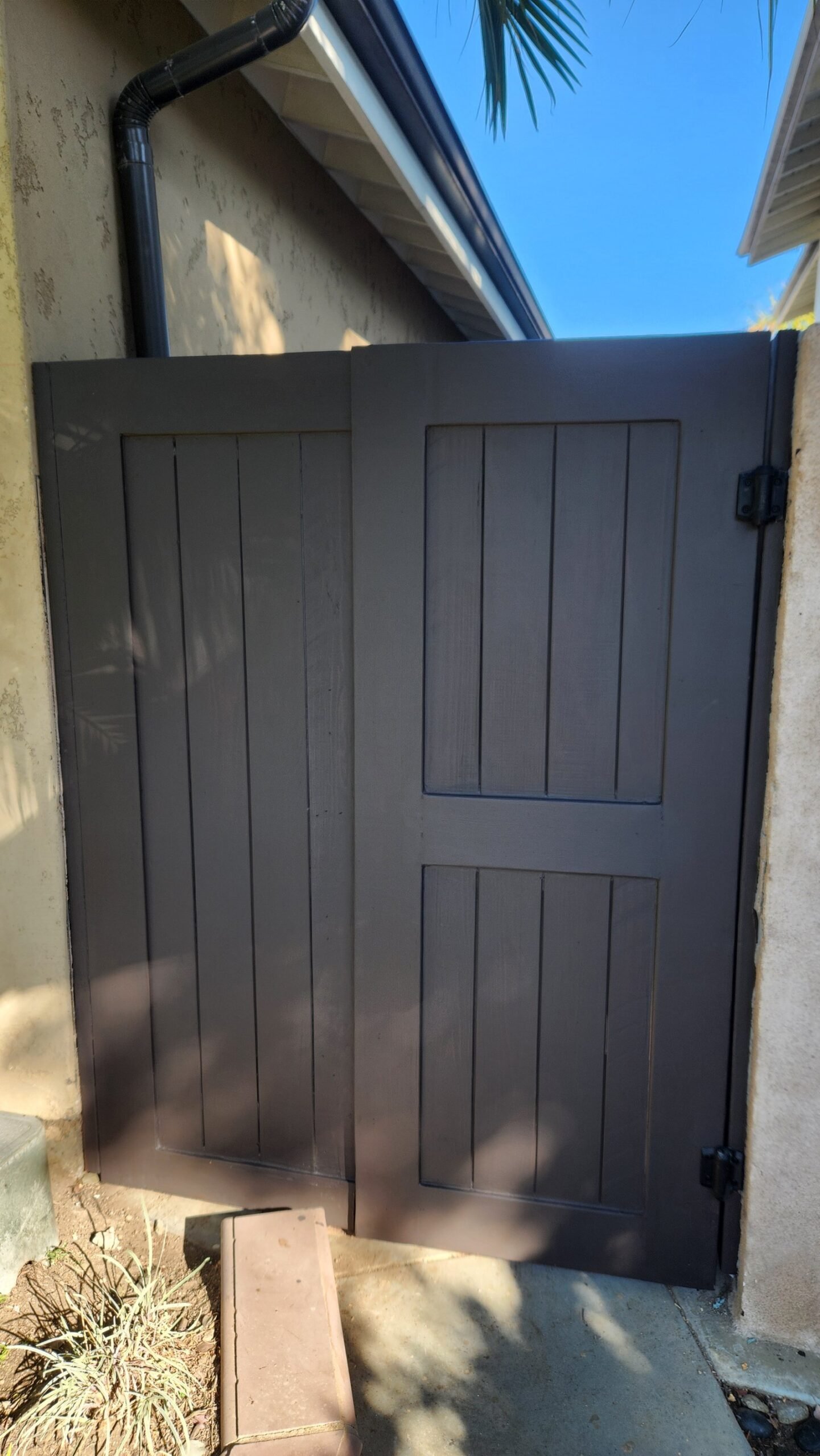
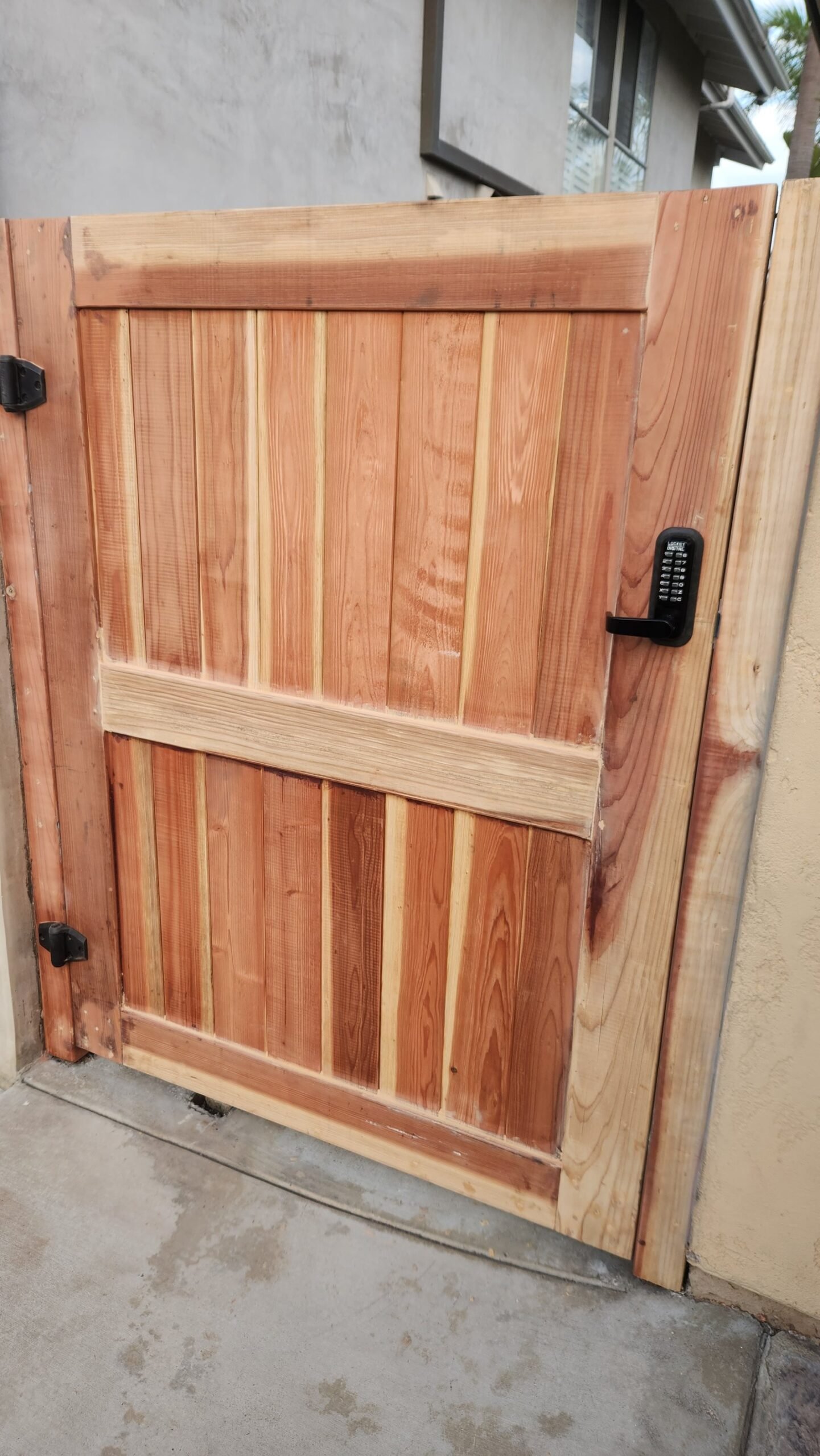
Gates
- Diagonal brace: Runs from the top hinge corner to the bottom latch corner, with an adjustable gate tension rod or turnbuckle cable kit
- Hinges and latch: Heavy-duty strap hinges or T-hinges rated for the gate’s size and weight, heavy-duty latches and drop rods; self-closing hinges for pool gates
Coastal Hardware
- Hardware: For Orange County’s coastal climate, we’ll use stainless steel (304/316 grade) or triple-coated galvanized hardware that resists salt air corrosion. Standard zinc-plated fasteners rust within 2 to 3 years near the coast.
Check Out Our Reviews


How Our Fencing & Gate Services Work and What to Expect
- 1
Step 1: Consultation & Property Assessment
Contact our fence installation experts in Orange County for a free consultation. We’ll evaluate property lines, soil conditions, terrain, drainage, access for equipment, and gate placement, so your fence plan avoids disputes and maximizes durability and functionality.
- Property lines and gate placement
- Soil, terrain and drainage
- Access for equipment
- 2
Step 2: Material Selection & Custom Fence Design
Select from high-quality materials such as wood, vinyl, or metal. We’ll design a custom fence layout that addresses slope, erosion, gate swing, and aesthetics. Our planning makes sure your fence is secure, visually appealing, and long-lasting while meeting local codes.
- Wood, vinyl or metal
- Slope, erosion and gate swing
- Local codes
- 3
Step 3: Expert Fence Installation & Walkthrough
Our team will install your fence with precision, including posts, panels, and gates. After installation, we’ll review alignment, stability, and overall finish, and provide maintenance guidance to maximize the lifespan of your new fence.
- Posts, panels and gates
- Alignment and stability checked
- Maintenance tips for your fence
Fence FAQ
What are the fence height codes and property line regulations in my neighborhood?
Height limits and setbacks are set by each city, and many HOAs add their own rules, so they vary across Orange County. Privacy fences are typically 6 to 8 feet tall, and setback rules often place the fence 3 to 6 inches inside the property line. During the free consultation we’ll review property lines and your city’s rules before anything is designed, so your fence plan avoids disputes.
Do I need my neighbor’s permission to build a fence on the property line in California?
It depends on where the fence sits. Building just inside your own property line is the most common way to keep it simple. For a fence on the shared line, talk with your neighbor before work starts, because California has rules on sharing the cost of boundary fences. We’ll confirm property lines with you during the consultation.
How do I prevent wood fence posts from rotting in Southern California soil?
Start with pressure-treated posts rated for ground contact (.60 retention minimum), set in concrete with the top sloped away from the post so water can’t pool. A 2×4 rot board keeps the panels 2 to 3 inches off the soil, and naturally resistant species like cedar and redwood help above ground. Sealing the wood every 2 to 3 years keeps it going for 15 to 20+ years.
Which fence material (wood, vinyl, wrought iron) lasts the longest?
Of the materials we’ll install, vinyl (25 to 30 years) and composite (25+ years) last the longest with almost no upkeep. Wood lasts 15 to 20+ years when it’s sealed every 2 to 3 years. Metal fencing depends on its coating and how close you are to the coast. We’ll explain the pros and cons of each option so you can make a confident decision.
How much does fence installation cost per linear foot in the OC region?
Cost per linear foot depends on the material, height, style, gates, and your site (slope, soil, and access). Traditional vertical wood is the most affordable style, horizontal runs about 15 to 25% more because of the extra labor, and composite costs more up front but saves on maintenance. We’ll give you an exact number after the free consultation.
How can I secure my fence with stronger hinges, latches, and brackets?
Use galvanized fence brackets between posts and rails, fastened with lag screws or through-bolts instead of nails. On gates, use heavy-duty strap hinges or T-hinges rated for the gate’s weight, a diagonal brace, heavy-duty latches and drop rods, and self-closing hinges on pool gates. Near the coast, choose stainless steel or triple-coated galvanized hardware so it doesn’t rust.
Planning a new fence or gate for 2027, or just have questions? We’re here to help. Feel free to reach out whenever you’re ready, and we’ll walk you through the options that make the most sense for your home. No pressure, just honest advice and quality work you can count on. You can also see our Custom Carpentry and Framing options for gates and complementary woodwork.
Call (949) 500-3689